Stage 1: Your enquiry
You call or send the form with your suburb, the roof type, what you have noticed and any urgency. Photos help. If water is coming in, say so.
You should have: a clear idea of what prompted the enquiry, and any old roofing paperwork you can find.
Stage 2: Referral to a local contractor
We pass your enquiry to an independent roofing contractor who works in your area and does the type of job you have described. They contact you directly to book an inspection.
You should have: the contractor's name and business details. Ask for their NSW Fair Trading licence number so you can check it on the NSW Government licence check.
Stage 3: The inspection
The contractor inspects the roof covering, ridges, valleys, flashings, gutters and penetrations, and the roof space where there is safe access. They discuss whether repair, partial replacement or full replacement makes sense, and why.
You should have: photos of anything they recommend you pay for, and answers to your questions about material, grade and colour. Our guide to roof inspections explains what a thorough one includes.
Stage 4: The written quote
The quote should be itemised:
- removal and disposal of the existing roof
- battens, sarking or blanket
- new covering with product, grade, profile and colour
- flashings, ridges, valleys, gutters and downpipes
- access equipment
- solar and electrical arrangements
- a rate for rotten timber found once the roof is open
- exclusions
- GST, start window, duration and payment stages
You should have: a quote you can compare line by line with others. See factors that affect roof replacement costs.
Stage 5: The contract
In NSW, residential building work over certain values must be done under a written contract, and the rules on deposits and insurance apply. As NSW Fair Trading explains it, contracts over $5,000 generally need to be in writing with specific information, deposits are generally capped at 10 per cent, and work over $20,000 generally needs home building compensation cover in place before a deposit is taken or work begins. Check the current requirements with NSW Fair Trading.
You should have: a signed contract, a copy of the home building compensation certificate where required, and the contractor's insurance details.
Stage 6: Approvals and bookings
Before work starts:
- any council approval needed for a change in material, form or heritage reasons
- asbestos removal arrangements, if relevant
- electrician booked for solar disconnection and reconnection
- materials ordered
- scaffold or edge protection booked
- neighbours told
You should have: confirmed dates, and the plan for weather delays.
Stage 7: Work on site
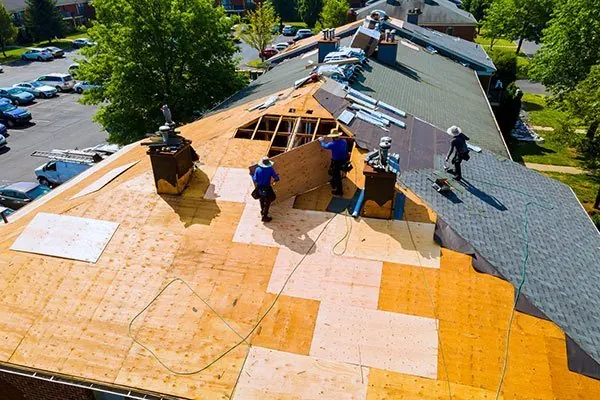
The crew sets up safety equipment, strips the roof in sections, shows you any damaged timber, installs battens, sarking and the new covering, then flashings and gutters. Each section is closed at the end of the day. What to expect during a roof replacement walks through it day by day.
You should have: progress updates and written agreement on any variations before extra work is done.
Stage 8: Handover
Walk around with the contractor. Check the roof from the ground, gutters and downpipes, solar and other reinstated items, ceilings inside, and the yard for screws and offcuts. Note any defects in writing.
You should have: material warranty documents, the contractor's workmanship terms in writing, and photos of the finished roof.
Stage 9: Final payment
Pay the final stage once the work matches the contract and agreed defects have been fixed or scheduled.
You should have: a final invoice and receipt. File everything with the house records.
If something goes wrong
Raise it with the contractor first, in writing. If you cannot resolve it, NSW Fair Trading provides information on home building disputes and a complaint process. Home building compensation cover may respond in specific circumstances, such as the contractor's insolvency or death.
Keeping a job file
It helps to keep everything for the job in one folder, paper or digital: the enquiry date, the inspection photos, each quote, the signed contract, insurance and licence details, variation approvals, progress photos, invoices, receipts and warranty documents. If a question arises years later, perhaps when you sell, claim on insurance, or notice a problem near a flashing, having the file makes it much easier to deal with.
Where we fit
We do the introduction and stay available if you have questions about the process. We do not supervise the work or hold payments. Read the disclaimer for the detail, and how this roofing service works for the background.