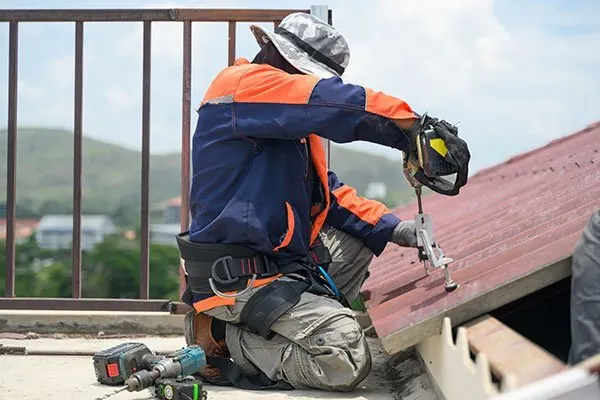
Roof repairs: what is covered
Roof repairs cover any fix short of replacing the roof: tracing and stopping leaks, replacing cracked or slipped tiles, rebedding and repointing ridge capping, replacing rusted screws and short runs of sheeting, re-sealing or replacing flashings around chimneys, walls and skylights, clearing and replacing valleys, and repairing storm damage. Repairs are arranged across Newcastle and Lake Macquarie through independent local roofing contractors, with a free on-site look and a written quote.
Finding the leak is most of the job
Water travels. It runs down a rafter, along the top of a ceiling sheet or along a sarking fold before it drips, so the stain in the hallway can be metres from the actual opening. A careful roofer looks at three things together: the roof surface, the roof space from inside, and the pattern of weather that produced the leak.
Typical entry points on Newcastle houses:
- Ridge and hip capping with cracked or missing mortar bedding, common on tile roofs from the 1960s to the 1990s
- Valleys clogged with leaves from street trees and gums, so water overflows the valley iron into the roof space
- Flashings around chimneys, parapets and walls where old mortar or sealant has let go
- Penetrations for flues, vents, aerials, solar mounts and air-conditioning lines that were sealed with silicone alone
- Rusted laps and fixings on steel roofs, especially on the side facing the ocean
- Box gutters on terraces and older commercial roofs that overflow inward rather than out
Repairs by roof type
Concrete and terracotta tiles. Cracked and slipped tiles, broken ridge bedding, perished pointing and blocked valleys. Walking on old tiles breaks more of them, so experienced tilers spread their weight and carry spares.
Steel roofs. Rust at laps and around screws, lifted or loose sheets after wind, failed silicone on flashings, and corrosion where incompatible metals touch, such as copper pipe dripping onto zincalume. Coastal houses often show it first on the seaward face.
Fibro and asbestos cement. These roofs should not be walked on, drilled or cut by anyone who is not trained and licensed for the work. A repair may be possible, but often the honest advice is to plan asbestos roof replacement.
Slate. Slipped slates from rusted nails, cracked slates, and failed lead or copper flashings. See slate roof replacement for when repair stops being sensible.
Emergency make-safe after storms
When a low or hailstorm comes through, the first job is stopping water getting in, not the permanent fix. That might mean a tarp, temporary sheet or replacing broken tiles enough to close the roof. The permanent repair follows once the weather settles and, if you are claiming, the insurer has seen the damage. Our guide to emergency roof work in Newcastle covers what to do in the first few hours.
Repair or replace?
A repair is the right call when the roof's materials are still sound and the problem is localised. When leaks keep appearing in new places, tiles crumble underfoot, or rust has gone through the sheet rather than sitting on the surface, a repair is only buying time. That is not a reason to rush, but it is a reason to start budgeting. Our comparison of roof leaks versus full roof replacement explains how roofers make that call, and the cost guide gives 2026 planning ranges for both.
Looking after the repair
Keep gutters and valleys clear, particularly in autumn and before winter lows. Keep tree branches trimmed back from the roof. After a big storm, look at the ceiling and the roof from the ground with binoculars rather than climbing up. If a stain returns, call the same contractor first and ask them to check their work.